A camouflage short, a camel herringbone jacket and the colours of a hot August evening. Sometimes military references work best when their original logic almost disappears. The camouflage shorts are the loudest part of this outfit, at least in theory. In practice, they almost disappear.
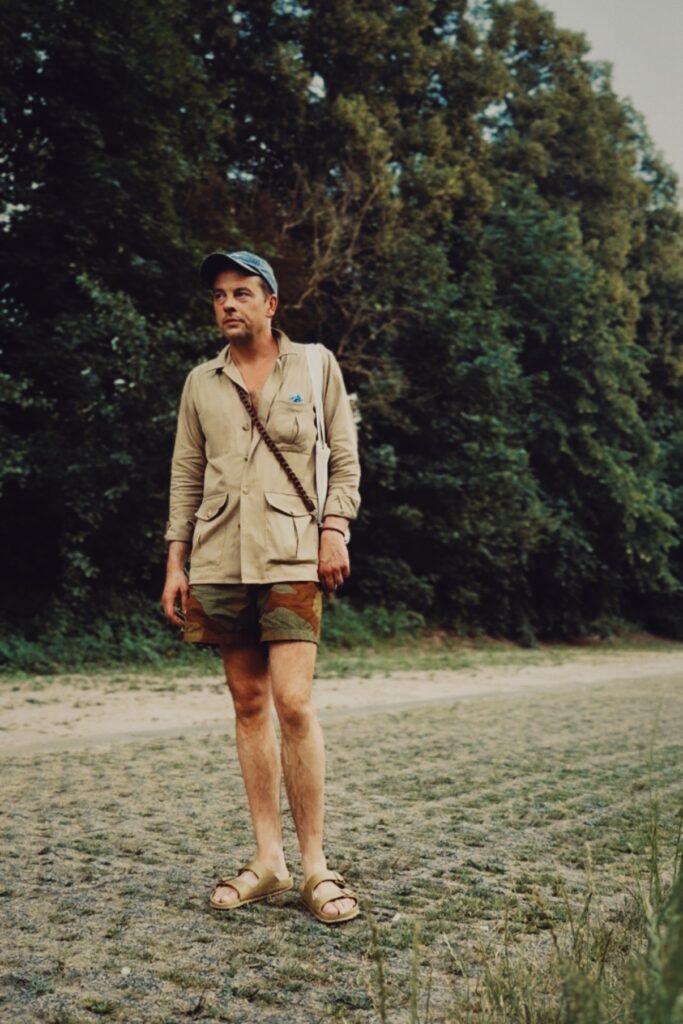
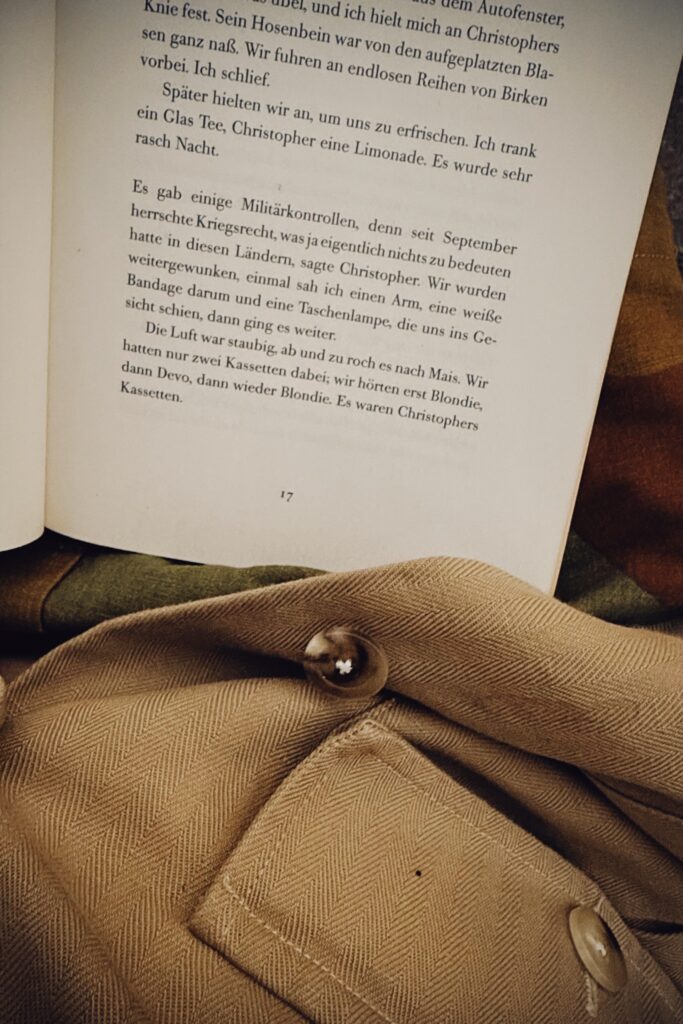
Their brown, olive and muted green sit close to the camel herringbone of the jacket. Against bare skin, leather sandals and the dry colours of late summer, camouflage stops behaving like a graphic pattern and becomes something closer to a palette.
That changes the military reference. There is still a field-jacket vocabulary in the pockets and practical construction of the surchemise, and obviously in the shorts themselves. But nothing here feels like an attempt to reproduce a uniform. The materials are too soft, the proportions too relaxed, the context too ordinary.


What interests me is how easily these colours move between categories. Camel can belong to tailoring, safari clothing or workwear. Olive can mean military clothing, but also simply summer vegetation. Brown can be leather, dry ground or part of a camouflage print.
Seen together, they become less about where the garments came from and more about where they are being worn. Perhaps that is when a reference becomes useful: when you can still recognise its origin, but no longer have to dress like it.